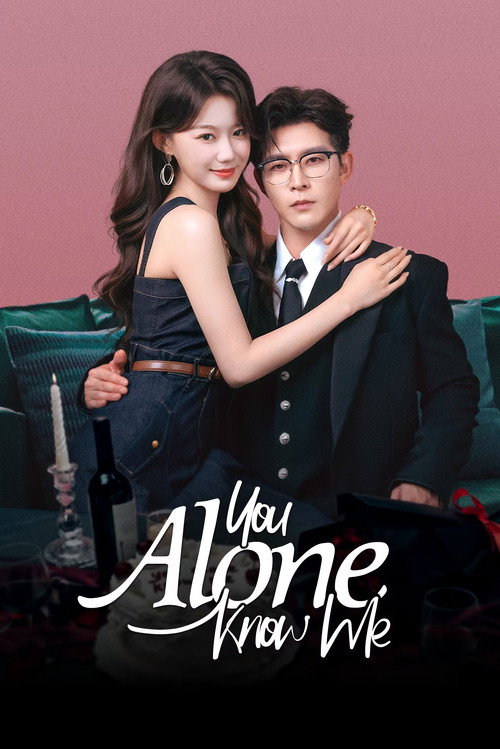
You Alone Know Me (舟寒知婳意)
If you love Contract Marriage / Fake Marriage combined with Marriage First & Love Later, You Alone Know Me delivers an engaging narrative tailored for trope enthusiasts.
⚠️ Spoiler-Free & Deleted Scenes Decoder
Broadcast Edits & Novel Accuracy Check✂️ Broadcast Edits & What You Missed (Click to reveal spoilers)
The drama is adapted from the Qimao novel 《闺蜜说她爸高冷,领证后却醉酒行凶》 by author 悄悄酱. The source is a long-form web novel; the drama is a 29-episode short drama with episodes running roughly eight minutes each, totaling approximately 232 minutes—roughly the length of a single feature film. Under this compression ratio, the vast majority of the novel's subplots, secondary characters, daily-life accumulation, and psychological interiority must be discarded. The drama retains the core emotional architecture—abandonment → contract marriage → quiet protection → revelation of past ties → tearing up the contract → HE—but the texture of the novel is necessarily lost.
Key Novel Elements Changed or Removed in the Drama
- At least one named character, 白灵 (Bai Ling), was entirely removed. Forum discussion of the adaptation notes that "several characters were deleted, most importantly Bai Ling". Bai Ling's function in the novel—whatever narrative role she played, whether as a rival, a confidante, or a complication—has no counterpart in the drama, meaning any subplot she anchored was excised along with her.
- The novel's intimate scenes could not be faithfully filmed. The same adaptation discussion observes that many of the novel's love scenes "would have to be shot as explicitly as Lust, Caution" to retain their intended effect, and that without this, "the flavor is gone". Under short-drama broadcast norms, the drama necessarily softens, implies, or elides the novel's physical intimacy, shifting the emotional register toward restraint and suggestion.
- The adaptation is described as "jumpy" and lacking the novel's delicate texture. The forum critique notes that "many very delicate places were not filmed well" and that the story "jumps" between beats. This is consistent with the structural reality: a 232-minute runtime cannot replicate the slow accumulation of a long web novel. The drama advances through key emotional nodes rather than the granular, day-by-day relationship-building that gives the novel its immersive quality.
- The novel's title-defining premise—"cold before the license, wild when drunk after"—is largely displaced. The source title promises a specific dynamic: a man who maintains a cold, controlled exterior until the marriage certificate is signed, after which alcohol unlocks a different, more unrestrained self. In a short drama with broadcast constraints, this premise is likely toned down or redistributed across smaller moments of "persona slippage" rather than preserved as a central, recurring dynamic.
Plot Overview
Title Analysis: 舟寒知婳意 / You Alone Know Me
Part 1: Character and Word Meanings
The title is a name-embedded construction: 舟寒 (Zhouhan) + 知婳意 (zhi hua yi) .
- 舟寒 (Zhouhan) is the male lead's given name, Xie Zhouhan. Zhou (舟) means "boat"; han (寒) means "cold" or "austere." Together they evoke a man of cool, restrained bearing.
- 知 (zhi) means "to know," "to understand," "to recognize."
- 婳 (hua) describes a woman of quiet grace and beauty; it is the character in the female lead's name, Lin Hua.
- 意 (yi) means "heart," "intention," "true feeling."
Part 2: Meaning as an Ordinary Phrase
"舟寒知婳意" is not a fixed idiom. Literally, it reads as: "Zhouhan knows Huayi's heart," or, more expansively, "the one who is cold as frost on a boat understands the heart of the quietly graceful one." The syntax places Zhouhan as the subject and zhi (to know) as the action directed toward Hua's yi (Hua's heart).
Part 3: Meaning as the Drama's Title
As a drama title, it performs three functions. First, it embeds both protagonists' names (Zhouhan and Hua), making the title itself a compressed narrative of their relationship—a device that is legible to Chinese viewers who encounter the character names in the synopsis. Second, zhi ("to know") is the defining action of the story: Xie Zhouhan's love for Lin Hua is not declared through pursuit but through years of silent understanding and protection. He was shown kindness by Lin Hua's mother in his youth and has carried her in his heart ever since, yet he never approaches her as a possessor—he approaches her as someone who knows what she needs before she asks. Third, huayi points to Lin Hua's own journey: after being abandoned "for profit" by her childhood sweetheart, she must relearn how to recognize her own heart. The title implies that the one who truly knows her is not the boy from her past, but the older man who has always been present, watching, waiting, and understanding. A promotional tagline for the drama renders this sentiment succinctly: "舟行千里,唯知婳意" —"Though the boat travels a thousand li, it knows only Hua's heart". The exclusivity of wei (唯, "only") is the emotional core of the title.
Part 4: Relationship and Difference Between the Chinese and English Titles
The English title, You Alone Know Me, is not a phonetic transliteration—it is a deliberate interpretive translation. The connection lies in the shared emphasis on knowing and exclusivity. The Chinese zhi ("to know") is carried directly into know; the implied exclusivity of "only Xie Zhouhan understands Lin Hua" is made explicit in the English You alone. The difference is more revealing. The Chinese title is name-embedded, reticent, and context-dependent. "Zhouhan" and "Hua" function as character identifiers for Chinese viewers; to someone unfamiliar with the plot, they are evocative but opaque images. The English title abandons the names entirely and opts for a direct, first-person emotional declaration: You alone know me. This is a common strategy in cross-border distribution—the English title must communicate the kind of emotional story this is without requiring a synopsis, while the Chinese title trusts viewers to gradually "recognize" the embedded names as they watch and to feel the quiet satisfaction of that recognition. The Chinese title is a puzzle that resolves into intimacy; the English title begins at intimacy and asks the viewer to discover why.
Main Cast


Deep Dive
Social Ecology: What Western Viewers May Struggle to Fully Grasp
1. The Precarious Position of the "Adopted Daughter" (养女)
Lin Hua is introduced as an adopted daughter. In Chinese family narratives, the yangnü occupies an ambiguous structural position: half family member, half outsider. She is raised within the household but does not possess the "natural security" that blood-related children are presumed to have. When family interests shift, her adopted status can be reactivated as a reminder—or as a tool. Western viewers are more likely to read "adopted daughter" through a legal lens: an adopted child is a full child, with the same entitlements and emotional standing as a biological one. In Chinese short-drama grammar, yangnü often functions as a marker of social vulnerability—a person whose belonging is conditional, revocable, and contingent on continued usefulness or favor. This is why Lin Hua's abandonment by her childhood sweetheart lands with doubled force: she is abandoned not only by a lover but by the one structure that was supposed to make her belong.
2. The Best Friend's Father: Generational Blurring Treated Lightly
Lin Hua's contractual partner is the father of her best friend, Xie Bao'er. In the Chinese context, "my best friend's dad" first and foremost occupies a senior/parental position; entering a romantic relationship with him crosses a perceived generational boundary. What is distinctive about this drama's handling is that it does not treat the boundary-crossing as the central taboo to be agonized over. The proposal comes from the best friend herself, and Lin Hua accepts "on a whim," as the synopsis puts it. The narrative treats the generational blur as a pragmatic premise rather than a transgressive climax. Western viewers may immediately reach for age-gap romance or the "daddy" trope, but those frameworks tend to make the age and authority differential the source of erotic tension. Here, the differential is acknowledged and then set aside; the story's real question is not "is this forbidden?" but "who has actually been protecting her across the years? " The Western analogue exists, but the tonal weighting is different.
3. The "Contract Marriage" as Defensive Pragmatism
The xieyi hunyue (协议婚约) is a high-frequency device in Chinese web short dramas, but its social psychology is not purely a romantic-comedy fantasy of fake marriage. It reflects a self-protective logic in a low-trust, high-risk emotional environment: enter the relationship in a revocable, definable, contractually bounded way first, then decide within the day-to-day whether to hand over your heart. Western contract marriage narratives usually come from the romantic-comedy tradition—visas, inheritances, performances—and the contract's function is to manufacture comic pretense before "real" love inevitably overtakes it. In You Alone Know Me, the contract is closer to a defensive choice after abandonment. Lin Hua has just been discarded "for profit" by her childhood sweetheart; the contract is her attempt to minimize emotional risk by making the terms explicit. The drama's emotional payoff is not the collapse of the pretense but the moment she is willing to tear up the contract—to choose vulnerability over safety.
4. The Moral Weight of "Qingmei Zhuma" (青梅竹马)
Gu Zheng and Lin Hua are qingmei zhuma—childhood companions who grew up together. In Chinese cultural logic, this is not merely "they have known each other since childhood." It carries an almost quasi-kinship ethical expectation: someone you grew up with is presumed to owe you a loyalty beyond that of an ordinary lover. The shared history creates a moral debt that ordinary romance does not. Gu Zheng's abandonment "for profit" is therefore not just a breakup; it is a betrayal of a shared history of growing up. The Western analogue childhood sweetheart leans more toward nostalgia and first-love romance—the bittersweet memory of what might have been. In Chinese narratives, qingmei zhuma is frequently weighted with this ethical dimension, and that weight is precisely what makes Lin Hua's trauma legible and her later difficulty trusting Xie Zhouhan psychologically coherent.
If this page helped you find your favorite actor or drama details, consider supporting the site.
Support me on Ko-fi