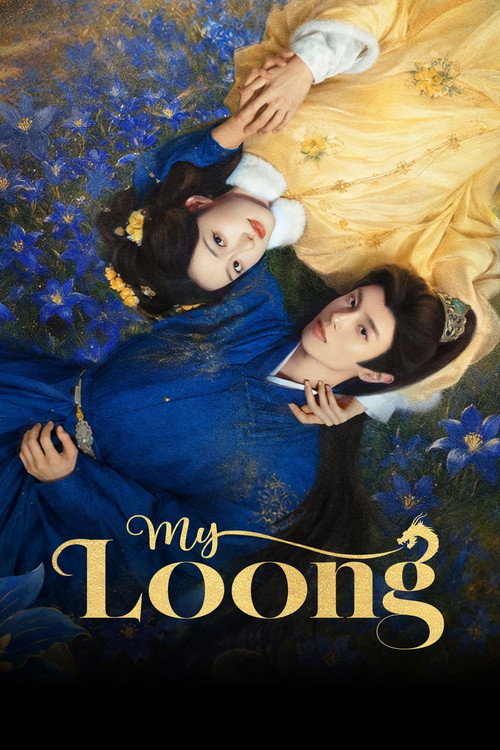
My Loong (予苍龙)
If you love Enemies to Lovers combined with Groveling / The Regretful Ex, and Slapping the Scum / Defeating the Mistress, My Loong delivers an engaging narrative tailored for trope enthusiasts.
Explore Show:
⚠️ Spoiler-Free & Deleted Scenes Decoder
Broadcast Edits & Novel Accuracy CheckEnding Status: Happy Ending (HE)
📚Novel vs. Drama Accuracy: N/A
✂️ Broadcast Edits & What You Missed (Click to reveal spoilers)
This appears to be an original screenplay, not a novel adaptation. No source material has been identified for this drama in the search results. The script is credited to Shu Ying, and the story is presented as an original production from Xiong Haizi Media and Shanghai Film & Television. Therefore, a novel-to-drama accuracy comparison is not applicable.
No login required • HD Raw Cuts & Romance Edits
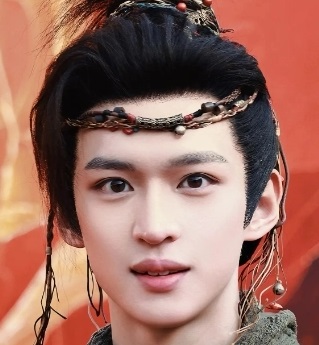
Main Cast


Deep Dive
1. Individual Character Meanings
- 予 (yǔ / yú) : This character has two primary classical meanings. As a verb (yǔ), it means "to give, to bestow, to grant" (e.g., 授予, 赋予). As a pronoun (yú), it is a classical first-person pronoun meaning "I" or "me," interchangeable with 余 (e.g., in the Analects).
- 苍 (cāng) : This means "dark blue," "deep green," or "ashen/grey," often used to describe the color of the sky or of ancient, vast things.
- 龙 (lóng) : This means "dragon," a central figure in Chinese mythology and culture. 2. Meaning as an Ordinary Phrase Taken literally, "苍龙" (Cāng Lóng) refers to the "Azure Dragon" or "Blue-Green Dragon." In ancient Chinese astronomy, it specifically denotes the "Azure Dragon of the East" (东方青龙) , one of the Four Symbols (四象) representing the eastern quadrant of the sky, comprised of seven lunar mansions. It is a symbol of the east, of spring, and of wood in the Five Elements system. The title "予苍龙" could therefore be parsed in two ways: "To Bestow upon the Azure Dragon" (if 予 is read as the verb "to give") or "I [Am] the Azure Dragon" (if 予 is read as the pronoun "I"). 3. Meaning and Significance as the Drama's Title The title is a poetic and deliberately ambiguous phrase that operates on multiple symbolic levels within the drama's narrative.
- The Act of "Giving" (予) : The story's inciting incident is the sacrifice of the female lead, Yue Wangshu (or Gu Qingyao in some sources), who is chosen as the "Dragon Consort" (龙妃) and is "offered" (献祭) to the sealed Dragon Lord, Li Zhi. The title can thus be read as the act of "giving a sacrifice to the Azure Dragon."
- The Identity of "I" (予) : Alternatively, read as a pronoun, the title becomes a powerful first-person declaration: "I [Am] the Azure Dragon." This interpretation aligns with the drama's core theme of the Dragon Lord's journey—a once-wild and indifferent deity who, through his bond with the female lead, learns human love and transforms into a guardian of the mortal world. It suggests the story is as much his as it is hers.
- Cultural Symbolism: The "Azure Dragon" is a symbol of immense, primordial power and cosmic order. By "giving" a human to this force, the title evokes themes of fate, sacrifice, and the taming of wild power through love—a fitting summary for a romance where a mortal girl and an ancient dragon god form a bond of mutual salvation against a predetermined destiny.
If this page helped you find your favorite actor or drama details, consider supporting the site.
Support me on Ko-fi