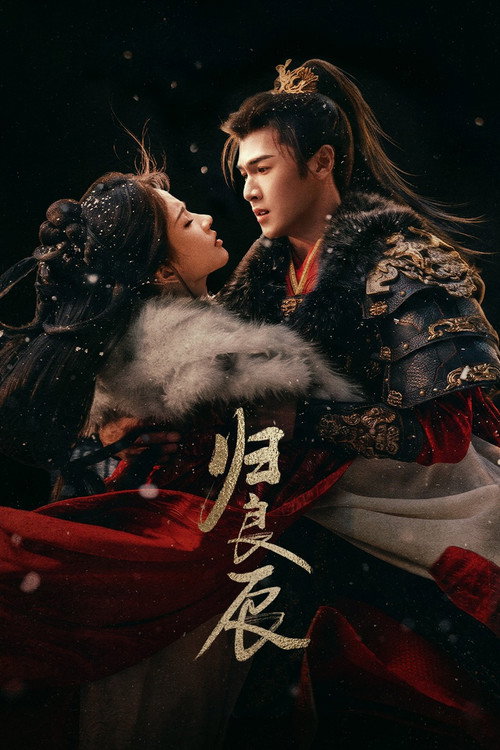
Bai Shu (白澍)
⚡ One-Click Stalking (Explore in Chinese)
Biography
Bai Shu is a fascinating study in resilience and the art of the comeback. He first won over audiences as the fiercely loyal, scene-stealing Teng She in Love and Redemption (2020), then became the target of intense criticism for his leading roles as Wu Xie in The Lost Tomb 2: Heavenly Palace and Duan Yu in Demigods and Semi-Devils. Rather than fading away, he quietly rebuilt his reputation through supporting roles, ultimately stealing the spotlight as the tragic, beloved Prince Xiao Ruofeng (the “Langya Wang”) across the Great Journey of Teenagers universe, and finally cementing his comeback as the benevolent Emperor in Blooming Flowers. His career is a testament to the idea that in Chinese entertainment, talent and a great supporting role can resurrect a career. Breakthrough Role Bai’s breakout moment came in 2020 with the xianxia hit Love and Redemption, where he played Teng She, a proud but simple-minded celestial beast who becomes a devoted companion. The role’s mix of cocky humor and genuine warmth made him a fan favorite and significantly raised his profile. However, his career trajectory was then defined by a pair of controversial leading roles — Wu Xie in The Lost Tomb 2: Heavenly Palace and Duan Yu in Demigods and Semi-Devils — which were widely panned by audiences and became his most notorious screen credits. It was his later role as Xiao Ruofeng in the Great Journey of Teenagers series that truly revived his career. His portrayal of the noble, tactically brilliant “Prince of Langya” — a character who appears to rebel but acts for the greater good — was so compelling that critics noted he “stole the show” from the lead actor, proving his acting mettle and winning back public affection. Public Perception Today, Bai Shu occupies a unique and somewhat bittersweet position in the Chinese entertainment industry. He is widely regarded as a talented actor whose career has been marked by “what-ifs” and uneven resource allocation. Public opinion has undergone a noticeable shift: once defined by the harsh criticism of his Wu Xie and Duan Yu performances, his image has been rehabilitated by a string of well-received supporting roles. Audiences now frequently praise his acting in period dramas, noting his suitability for “young generals and political intrigue” roles and his “regal aura” that shines through in his performances. However, he is also seen as an actor who lacks the powerful backing or commercial appeal to secure top-tier leading roles, and his career is often described as that of a reliable, high-quality supporting actor rather than a mainstream star. While he may never be the biggest name in C-ent, he has earned a new level of respect and is no longer simply “that actor who ruined Wu Xie” — he is now recognized as a performer who can consistently deliver when given the right role.